Nordmann fir (Abies nordmanniana) Christmas tree growers in the PNW should be on the lookout for the silver fir woolly adelgid [Adelges (Dreyfusia) nordmannianae]. In Europe, this insect is a serious pest on Nordmann fir Christmas trees. Although damage from this pest has rarely been seen in the PNW, it has been recently detected on Nordmann fir trees at several farms in the South Puget Sound region.
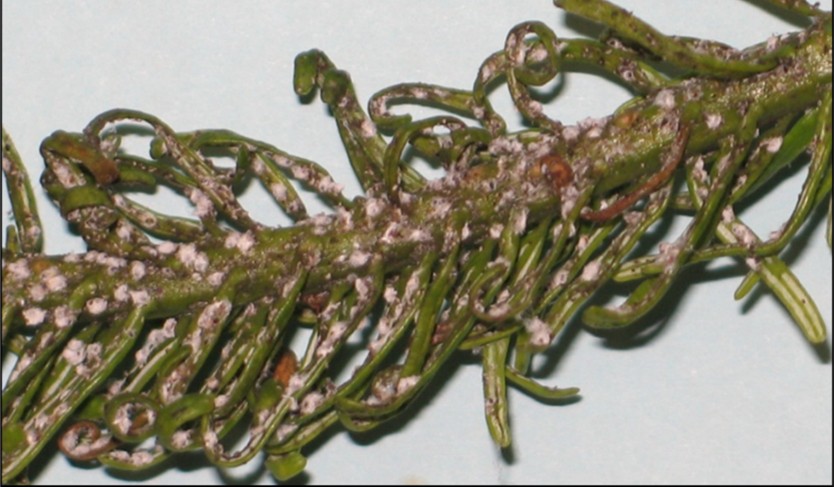
Symptoms: The silver fir woolly adelgid has a very complex life cycle. Research at WSU Puyallup indicates there are two generations per year. It primarily attaches to newly emerging shoots and symptoms associated with this adelgid result from the feeding of this pest on newly emerging shoots and needles. Infested needles are often chlorotic, shortened, and twisted downwards. The severity of symptoms varies depending on the level of infestation. Needles on lightly infested shoots may be the same length as non-infested needles, while elongation of needles on highly infested shoots is very stunted and the shoots with be deformed, shortened, brown, and dry. Given the recent detections of the silver fir wooly adelgid, growers are encouraged to monitor their Nordmann fir plantings for this pest. Symptoms and various life stages are evident throughout the year. Spring is an excellent time to monitor fields to determine if this pest is present and make decisions about controlling it. Look for trees with light green to yellow foliage and then check for symptoms and life stages of the adelgid on shoots and needles. Below are pictures illustrating the range in symptoms and pest life stages, also available at this link:
A Pictorial Guide for Monitoring Silver Fir Woolly Adelgids on Nordmann fir
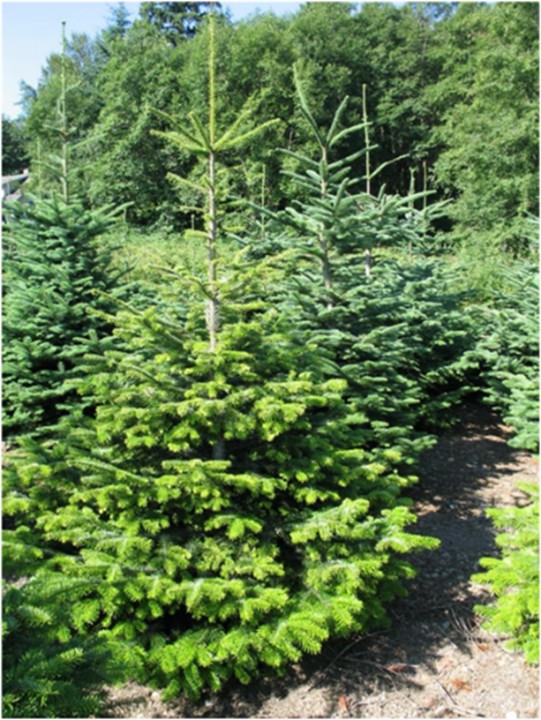
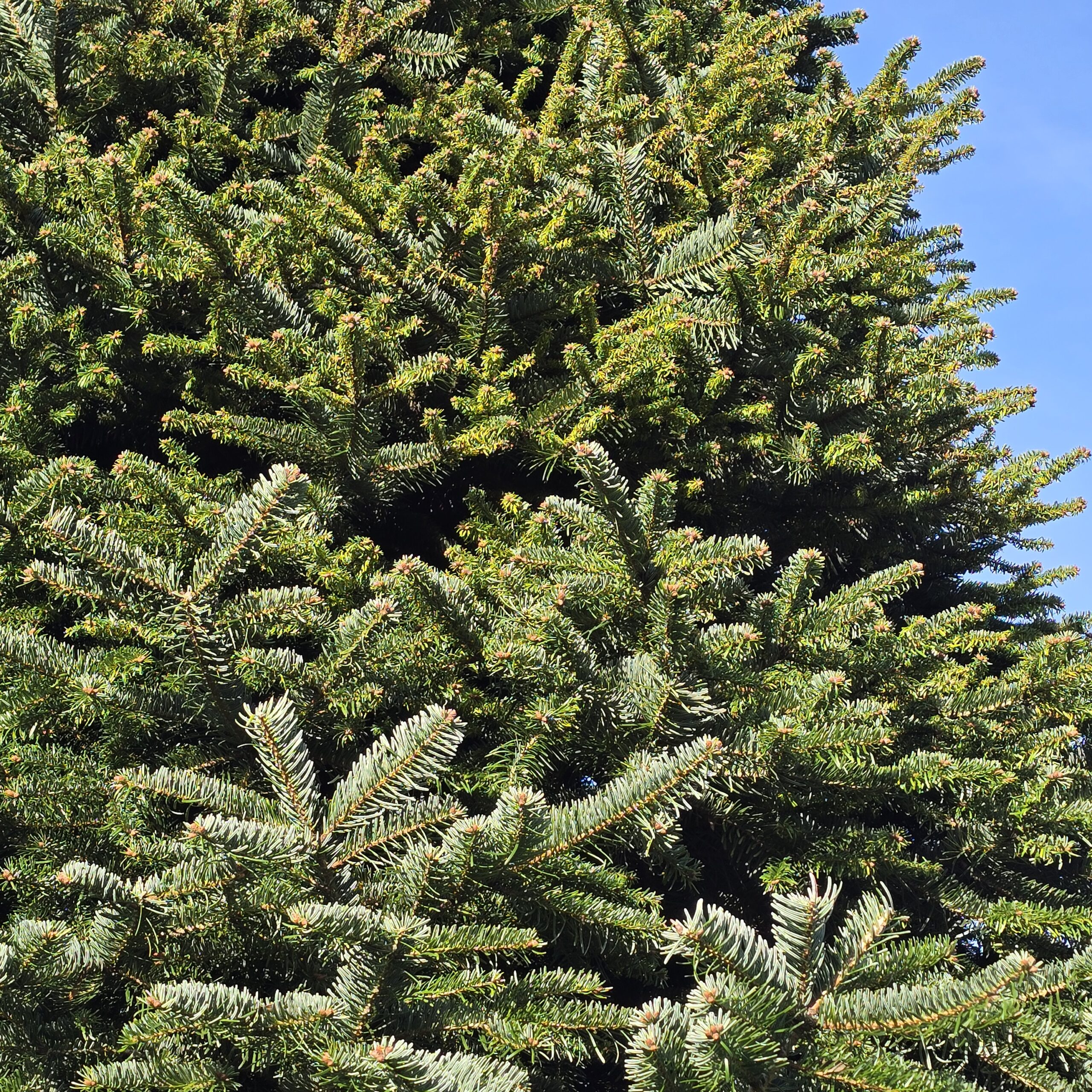
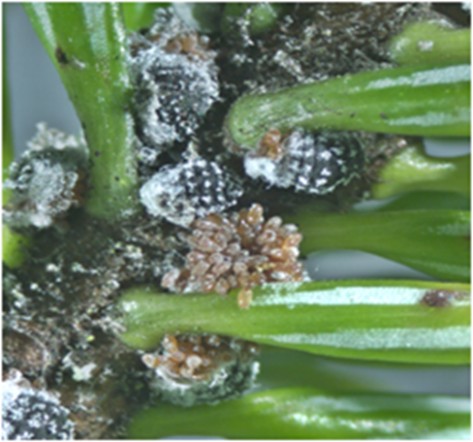
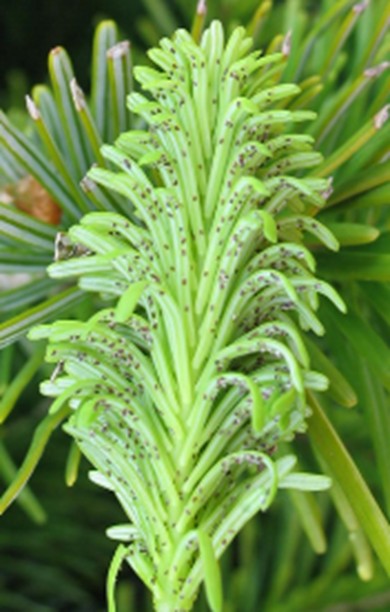
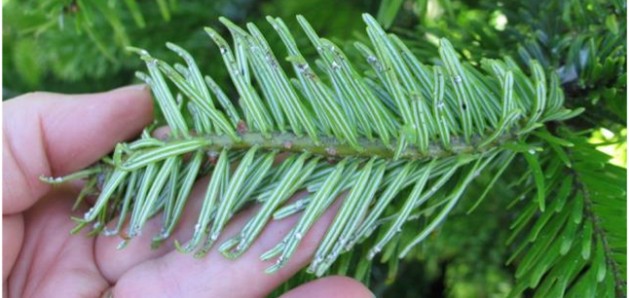
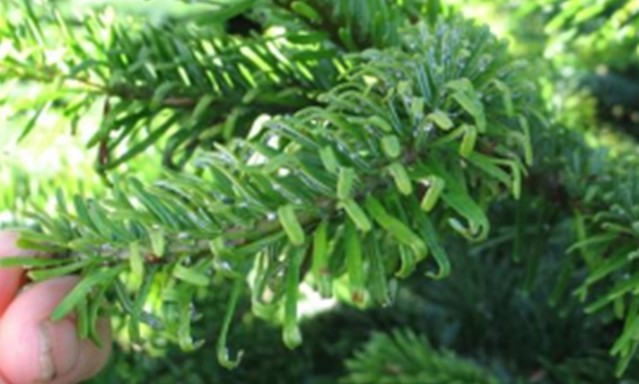
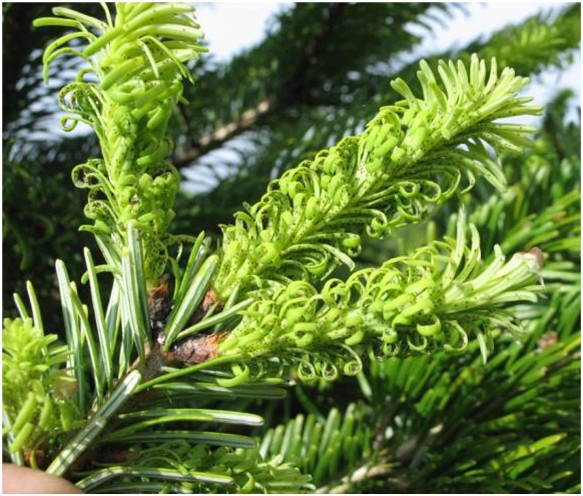
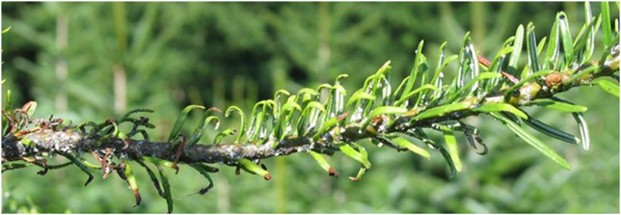
To help us understand the distribution of this adelgid, and trends in production of Eurasian species (Nordmann, Trojan, Turkish firs) answer the questions on the form below to share with us the results of your monitoring.
If you find suspected adelgid damage on Nordmann fir trees similar to the photos above, you can send a sample to us for confirmation of the silver fir woolly adelgid.