Phytophthora (fy-toff-thor-uh)
Symptom ID Guide: Rhododendron species
Phytophthora species are microscopic organisms that can cause disease in Rhododendron plants.
You can learn more about Phytophthora and Sudden Oak Death at the links below.
Rhododendron species
Diversity
There are many beautiful Rhododendron species. Many are exotic to the Pacific Northwest, but thrive in managed gardens.
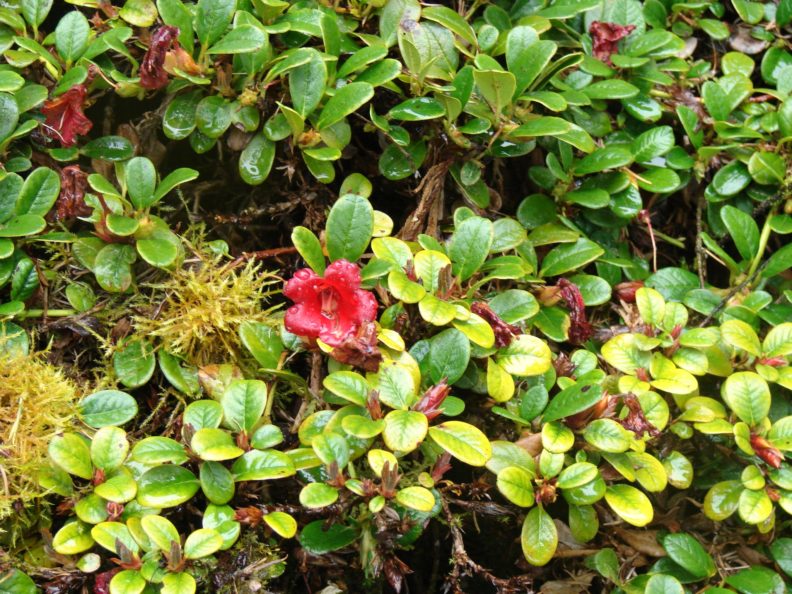
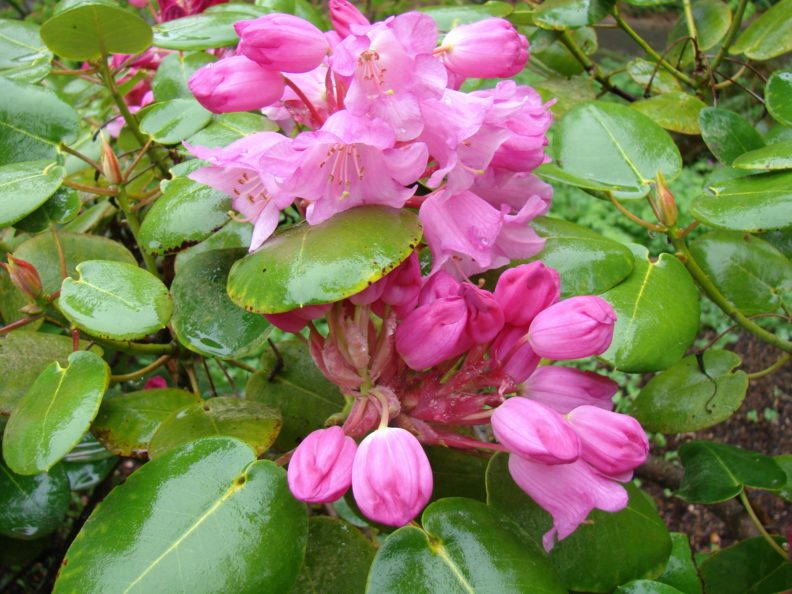
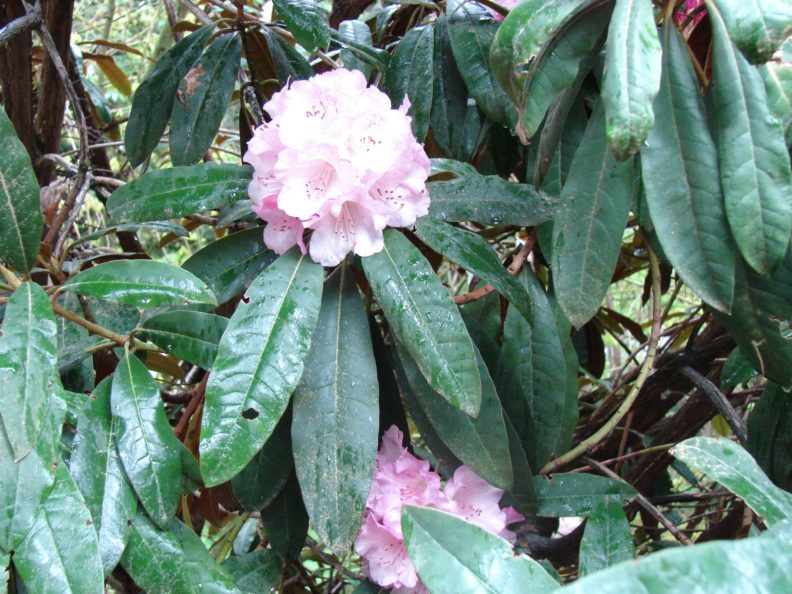
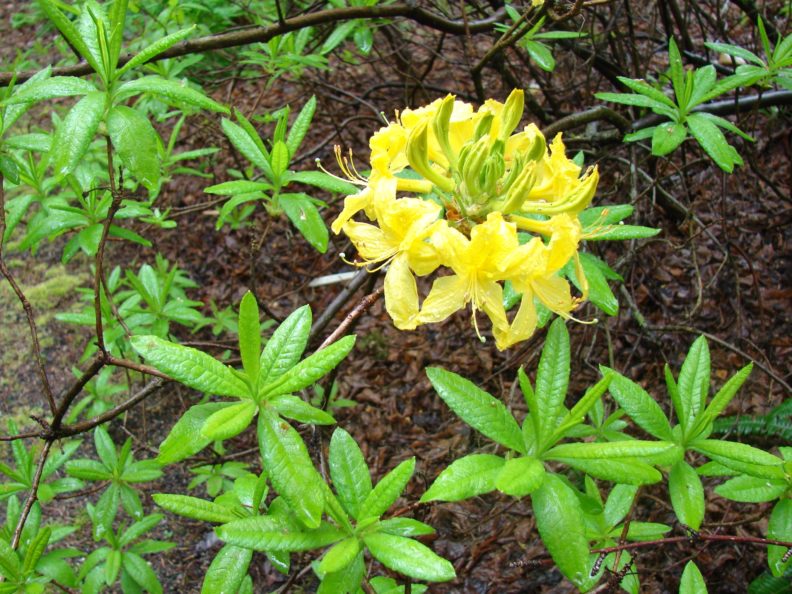
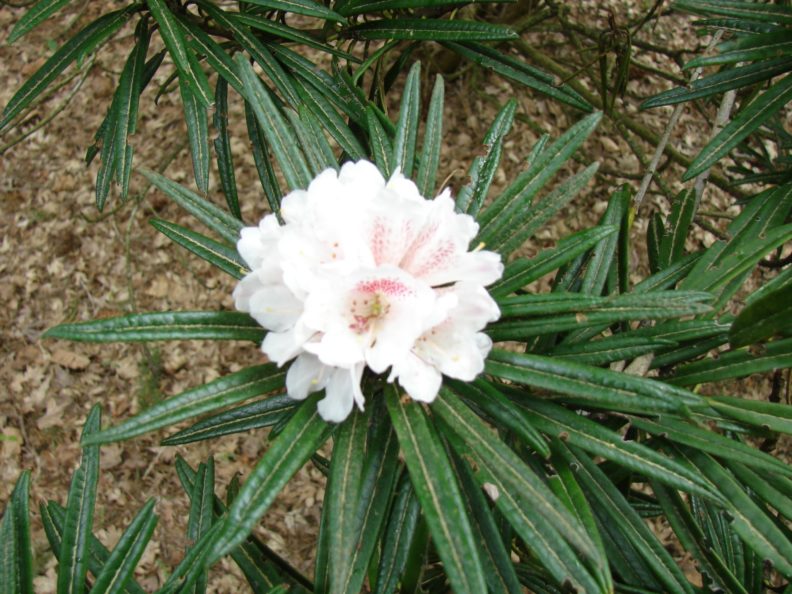
More information about the diversity and characteristics of Rhododendron species are available at the links below.
- USDA Plants Profile
- The Jepson Herbarium
- USDA Forest Service Fire Effects Information System
- Native Plants PNW
Susceptibility to Phytophthora ramorum
Our program has conducted a little research on the differences in susceptibility between a few varieties. Our research projects page has some information about Rhododendron susceptibility.
Some Rhododendron species and cultivars that have tested positive for P. ramorum in nursery inspections are listed below. This is not a complete list.
| Cultivar | Parents |
| ‘Unique’ | Campylocarpum hybrid |
| ‘Baden Baden” | ‘Essex Scarlet’ (parents unknown) x forrestii ssp. forrestii Repens Group |
| ‘Anna Krushke’ | ponticum seedling |
| ‘Roseum Elegans’ | catawbiense hybrid |
| ‘Bruce Bretchbill’ | bud sport of ‘Unique’ |
| ‘Edith Bosley’ | Dexter Bosley #1035 x Lee’s Dark Purple (catawbiense x unknown ) |
| ‘English Roseum’ | catawbiense x unknown |
| ‘Lee’s Dark Purple’ | catawbiense x unknown |
| ‘Purple Splendour’ | ponticum x unknown |
| ‘Rocket’ | ‘Cunningham’s White’ x red catawbiense seedling |
| ‘The Hon. Jean Marie de Montague’ | griffithianum x unknown |
| ‘Chionoides’ | ponticum hybrid |
| ‘Daphnoides’ | R. virgatum ssp virgatum x unknown |
| ‘Holden’ | red catawbiense seedling x ‘Cunningham’s White’ |
| ‘Nova Zembla” | Parsons Grandiflorum (parents unknown) x hardy red hybrid |
| ‘Catawbiense Album’ | catawbiense hybrid or selection |
| ‘Christmas Cheer’ | caucasicum hybrid |
| ‘Colonel Coen’ | unknown, but contains ponticum |
| ‘Cunningham’s White’ | caucasicum x ponticum, white flowered |
| ‘Grace Seabrook’ | Jean Marie de Montague’ x strigillosum |
| ‘Royal Purple’ | unknown |
Phytophthora ramorum Symptoms on Rhododendron
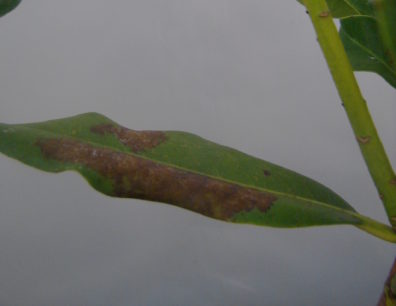
Leaf blight
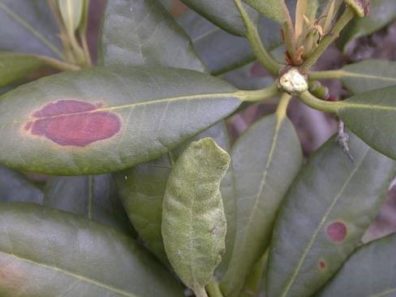
Phytophthora ramorum symptoms on Rhododendron consist of leaf blight and shoot dieback. These symptoms are indistinguishable from symptoms caused by other Phytophthora species.
Leaf lesions will have dark discoloration that often follows the midrib or petiole. These lesions are often most severe at places where water accumulates, such as the leaf tips.
Shoot blight
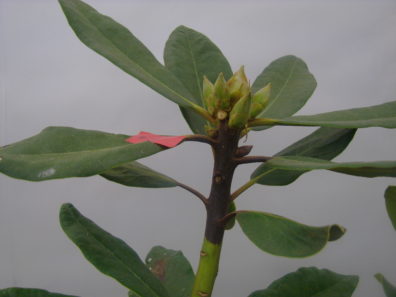
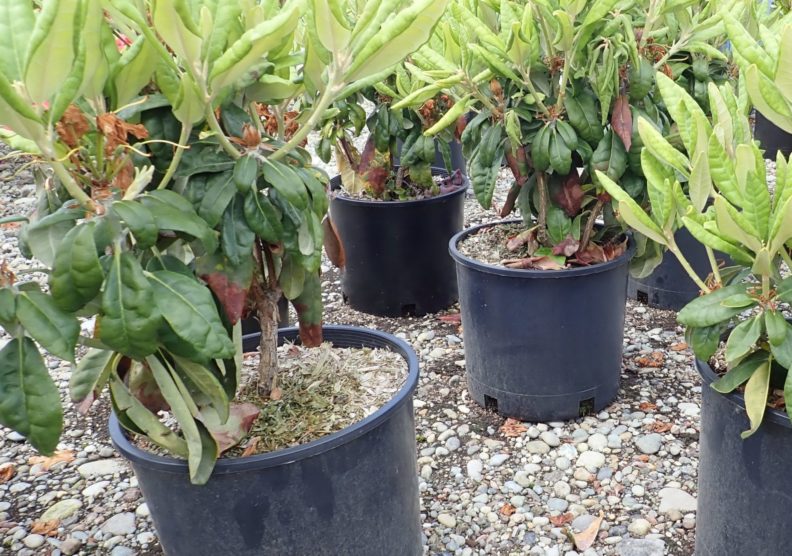
Phytopthora ramorum can also cause shoot blight on Rhododendrons. The wood will be stained brown under the bark and the bark will be blackened.
Shoot blights are also caused by Botryosphaeria and Phomopsis, which can look similar to those caused by P. ramorum. However, tiny pinhead-like fruiting bodies can sometimes be seen, whereas with a Phytophthora infection, visible fruiting bodies are not present.

Sun scorch
Sun scorch and other leaf spots caused by fungi can resemble symptoms of P. ramorum.
These symptoms differ from those of P. ramorum by having defined margins, fruiting bodies (in the case of fungi), and often do not follow the midrib or petiole. They can occur anywhere on the leaf, not necessarily where water collects.
Wilting
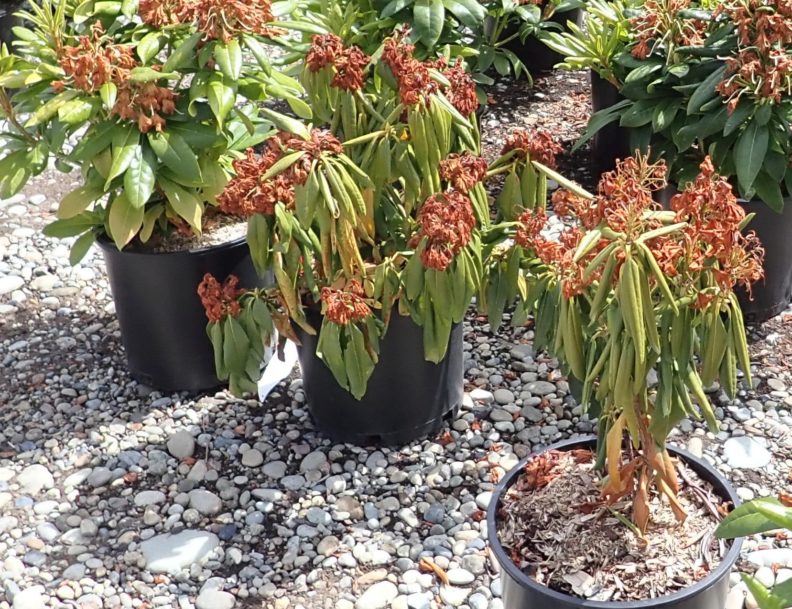
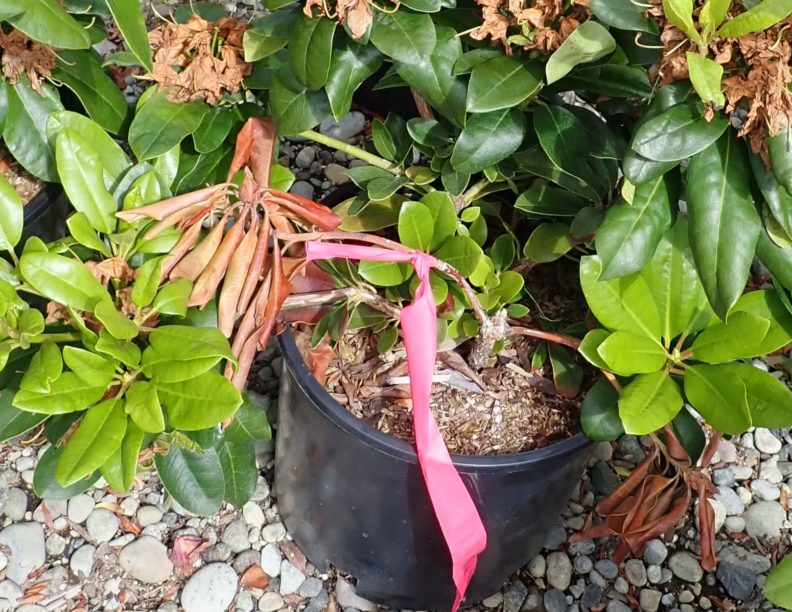
Wilting can be a symptom of infection, but there are many causes of wilting. If adding more water does not help, it could indicate the plant is infected with a pathogen such as Phytophthora or or another fungus such as Botryosphaeria, but it does not necessarily indicate that Phytophthora ramorum is involved.
There are many species of Phytophthora that can cause a plant to wilt and die. For example, Phytophthora cactorum, P. cinnamomi, and P. citricola cause root rot and stem cankers.

More Resources
Learn more about Sudden Oak Death
More information, including links to youtube videos, about Sudden Oak Death.
You can also find information for specific audiences (e.g. nursery professionals, garden managers, master gardeners, etc.) on our Sudden Oak Death Education Program webpage.
View more online symptom guides
We have prepared a list of links to other symptom guides. Viewing multiple photos of symptoms on Rhododendrons may help you determine if Phytophthora ramorum is involved on yours.
Management
Visit our webpage for Nursery Productions if you are looking for Best Practices for managing Phytophthora ramorum. These practices are also useful for managing other Phytophthora diseases, such as those that cause root disease, which can be more damaging than P. ramorum on their hosts.
Relevant WSU Extension Document
Other Rhododendron Diseases

Diseases of Rhododendrons are not limited to those caused by Phytophthora species. The American Phytopathological Society website lists a number of diseases and pathogens impacting Rhododendron species.
If you are uncertain and concerned about the possible pathogens affecting your Rhododendron plants, we encourage you to contact us or submit a sample to the WSU Plant and Insect Diagnostic Laboratory (see below).
Plant Disease Diagnostics
Guidelines for submitting a sample
Visit our Sample Submissions Guidelines webpage for information to help determine whether it will be helpful to submit a plant sample for professional diagnostics.
WSU Plant and Insect Diagnostic Laboratory
The WSU Plant Clinic can provide diagnostic services to identify the cause of symptoms on Rhododendrons and other plant species.
Before sending any plants or insects, make sure to read their instructions for submitting a sample.

Learn More About the PPO Program
Our Research
Check out the breadth of research conducted by people in our program.
Our Community
Learn more about the personnel involved in advancement of knowledge in our program.
Support Our Program
Read more about our program and the ways to increase our capacity to serve and advance knowledge.


WSU Puyallup Research & Extension Center
2606 West Pioneer, Puyallup, WA, 98371-4998 USA
Last updated 9/24/2025