Several species of Phytophthora attack Pacific madrone. In western Washington we have P. cactorum, a Phytophthora that also infects apple and other fruit trees in eastern Washington. In California P. cinnamomi causes severe damage in forests.

During a period of extended soil moisture, the swimming zoospores seek out plant roots and attach to them. If they are successful, they invade the root system and kill fine feeder roots. The disease can spread into the woody roots and up into the root collar, where it forms a dark “cats ear” type of lesion.
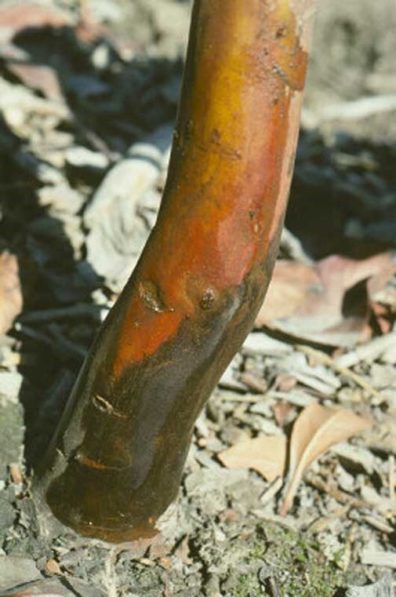
The infection will eventually girdle the stem and choke off the water supply from the roots. Damaged roots do not conduct water and the tree will show symptoms of drought stress. These symptoms include wilting, yellowing foliage. The added water stress can also make canker and dieback fungi more aggressive.

In chronic cases, the size of the foliage is reduced and the tree canopy appears thin. Symptoms usually are apparent in the summer when water demand is higher.
WSU Puyallup Research & Extension Center
2606 West Pioneer, Puyallup, WA, 98371-4998 USA
Last updated 9/24/2025