Growing Pacific Madrone
Introduction
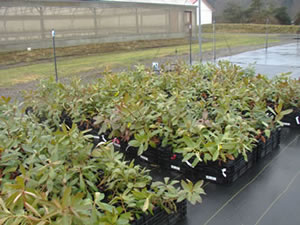
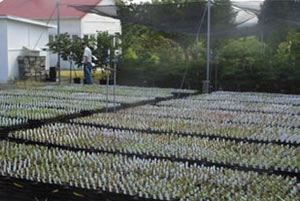
Pacific Madrone Propagation
Pacific madrone is often propagated because it is an important and characteristic species of the Pacific Northwest. However, growing this species can be difficult because of its susceptibility to soil and root disturbance.
Resources
Here we provide the information and resources that we use for propagation at the WSU Puyallup Research and Extension Center. However, please let us know if you have other resources or advice for growing Pacific madrone to share.
Our Research
Visit our Pacific Madrone Research Projects webpage to learn more about the research projects we are conducting.
Interested in learning more?
Feel free to contact us for more information. Also, be sure to check out and follow updates from the Arbutus ARME about upcoming workshops and new resources.
Seedling Germination and Establishment
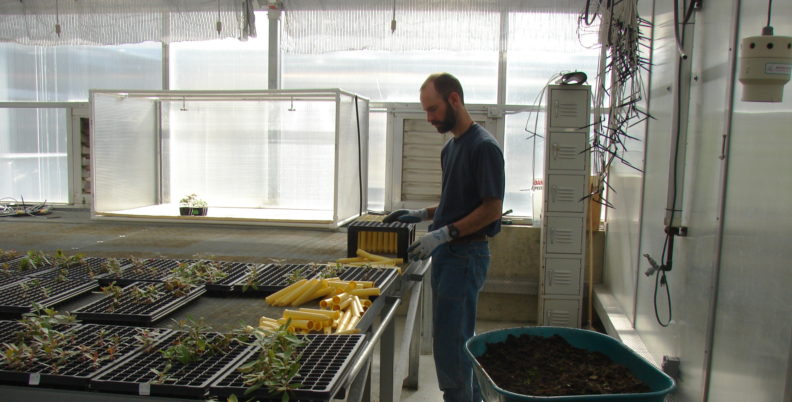
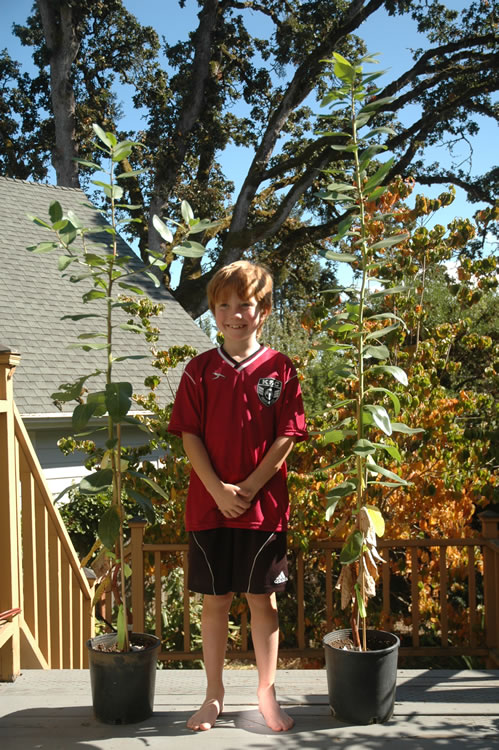
Seed Germination Method used in our Program
Fruit should be red and fully ripe when collected, usually in October, though timing can vary depending on the region.
Processing Fruit:
- Soak fruit for at least 24 hrs.
- Macerate fruit in the blender for 2- 5 minutes, depending on how firm it is.
- After maceration, float off the unripe seed and outer parts of the berry.
- Dry seed at room temp for one week.
- Store in glass jars at 34 ۫ F.
Propagation:
- Soak seed for 24 hrs.
- Surface sterilize for 10 min. with 10% bleach solution.
- Moist stratify at 34F for 60 days.
- Sow in plug trays and top-dress lightly with fine vermiculite.
- Germinate at 68-80 ۫ F.
- Drench with a fungicide to prevent damping-off (optional).
- Fertigate weekly at 100 ppm N to start, building up to 300 ppm N at the end of plug stage.
- After two months (approx.), transplant plugs into 0.5ℓ treepots for one season, after which they are outplanted to the field.
Transplanting Study
Pacific madrone has a reputation for being difficult to transplant because its roots react poorly to disturbance. Before transplanting into the common garden sites, studies were undertaken to determine the best methods for planting madrone seedlings.
Two-year-old seedlings from three families were subjected to five treatments and planted in December 2010. Seedlings were examined in May 2011.
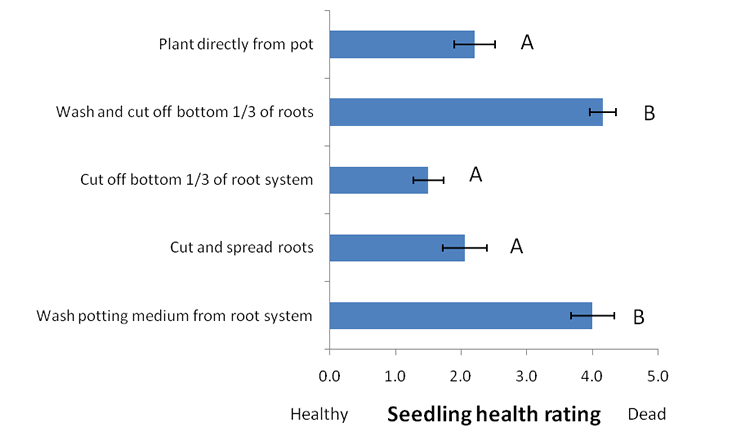
Treatments that involved washing the roots resulted in the most seedling mortality. Cutting off the bottom 1/3 of the roots resulted in the least seedling mortality.
Please contact us if you have more questions about this study.
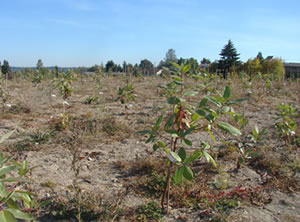
Transplanting Methods Tested
- Control – plant directly from pot
- Cut and spread: 4 cuts down side of root ball, then outer roots are straightened and spread
- Cut off bottom 1/3 of root system
- Wash – wash potting medium from root system using a high pressure stream.
- Wash and prune – wash as in #4 and cut off bottom 1/3 of root system.
More Information
Arbutoid Mycorrhizae
Pacific madrone forms symbiotic relationships with fungal species known as mycorrhizae. These fungi scavenge, store, and share nutrients with the roots of madrone trees. Therefore, the presence of these fungi has been suggested to help establish madrone seedlings. However, this has not been empirically tested to our knowledge (please contact us if you are interested in supporting such research).
More information about the mycorrhizal associations with Pacific madrone is available below.
Other Websites
Technical Literature on Madrone/Mycorrhizal Relationships
(contact us for PDFs)
- Smith, S. E., and D. Read. 2008. 7 – Ectendo- and arbutoid mycorrhizas. Pages 269–XI in S. E. Smith and D. Read, editors. Mycorrhizal Symbiosis (Third Edition). Academic Press, London.
- Zak, B. 1976. Pure Culture Synthesis of Pacific Madrone Ectendomycorrhizae. Mycologia 68:362–369.
Additional Madrone Propagation Resources
- Propagation guidelines for Arbutus menziesii, Garry Oak Ecosystem Recovery Team
- Growing Texas Madrone from seed, Bob Harms, University of Texas
- The challenges of establishing Pacific madrone (pdf), Sound Native Plants
Technical Literature on Madrone Propagation
- Harrington, C.A. and J.M.Kraft. 2004. Cold Stratification of Pacific Madrone Seeds. The Native Plants Journal 5.1: 66-74.
- Mackay, W.A. 1996. Micropropagation of Texas Madrone, Arbutus xalapensis (pdf) H.B.K.. HortScience 31(6):1028–1029.
- McDonald, Philip M., Tappeiner, John C., II. 2002. California’s Hardwood Resource: Seeds, Seedlings, and Sprouts of Three Important Forest-Zone Species (pdf) Gen. Tech. Rep. PSW-GTR-185. Albany, CA: U.S. Department of Agriculture, Forest Service, Pacific Southwest Research Station; 39 p.
WSU Puyallup Research & Extension Center
2606 West Pioneer, Puyallup, WA, 98371-4998 USA
Last updated 9/24/2025