Introduction
Phytophthora (fy-toff-thor-uh) species
More than 150 species of Phytophthora have been described, but our understanding of the species present in Washington is limited. For example, most of the monitoring and research has focused on Phytophthora ramorum, the species that causes Sudden Oak Death. Therefore, more research is needed to identify the other species present and determine if they are invasive or as aggressive as P. ramorum.
Early detection and control
In addition to identifying other Phytophthora species in Washington’s watersheds, it is is important to continue monitoring for the spread of Phytophthora ramorum. Detecting populations when they are still small may be the best approach to controlling and stopping the damage from P. ramorum.
Stream monitoring programs have been shown to be an effective approach to detect the spread of P. ramorum, which helps focus eradication efforts and reduce its threat to our landscape and forest ecosystems.
Phytophthora Biology
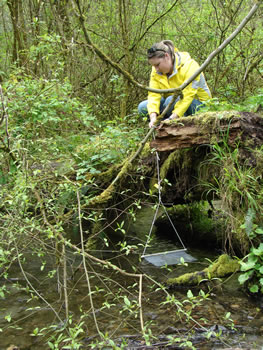
A major characterizing feature of Phytophthora is the ability to produce swimming spores. Zoospores are swimming spores that can move through wet environments such as streams, irrigation pools, and even moist soil.
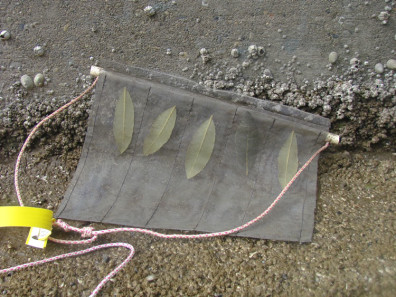
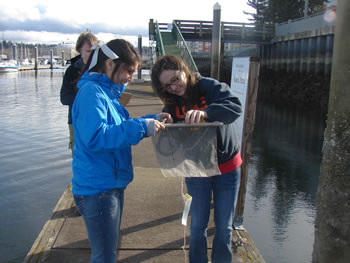
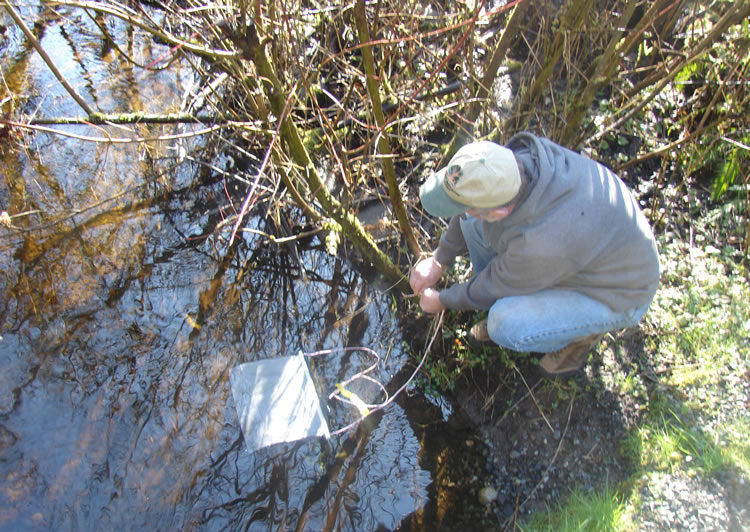
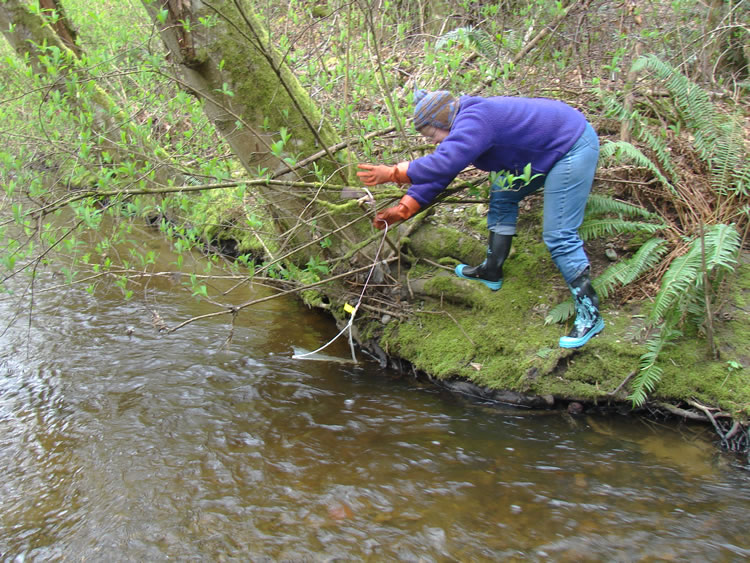
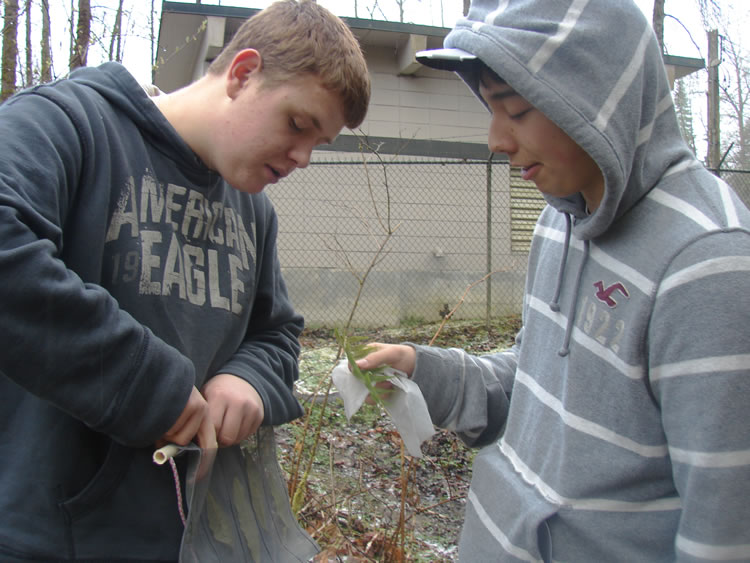
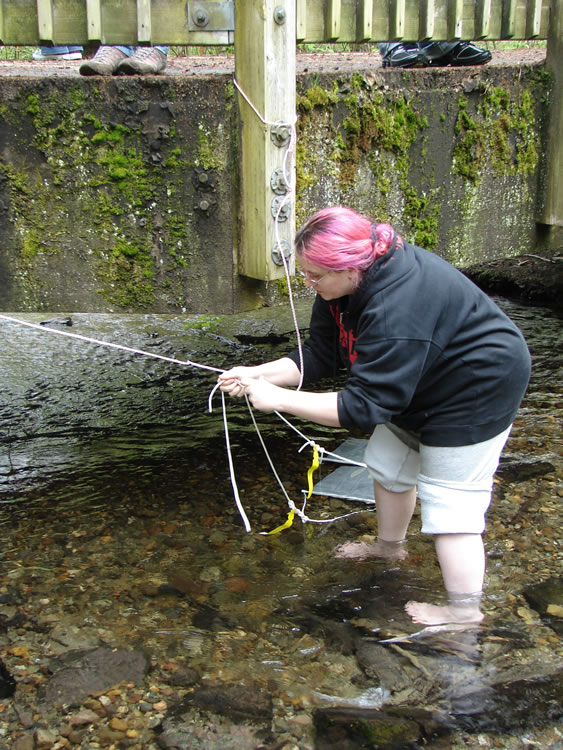
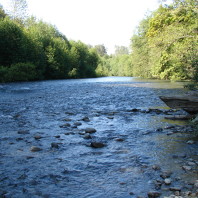
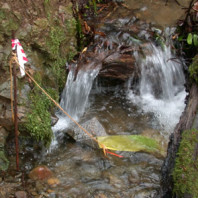
Therefore, a common and effective method to collect Phytophthora is to go fishing! However, to ‘fish’ for Phytophthora, we use healthy plant leaves as ‘bait’. This method is the basis of our stream monitoring protocol.

Objectives
The objectives of the Volunteer Stream Monitoring Program are to:
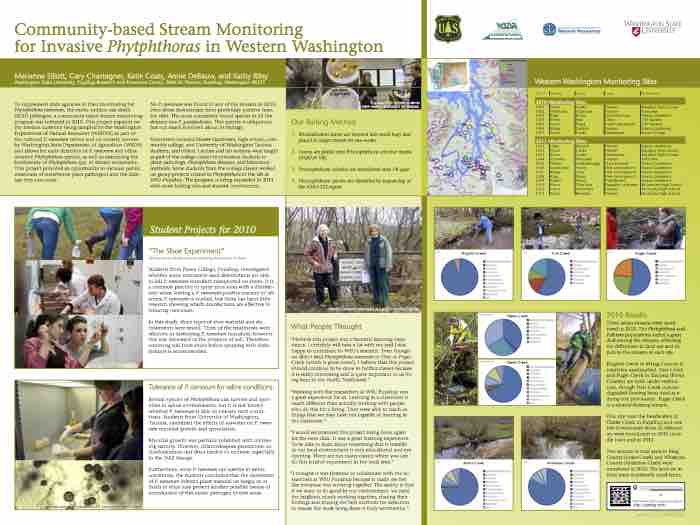
- Gather baseline data on Phytophthora species present in western WA urban and wildland areas
- Detect the emergence of invasive Phytophthora species early
- Track the movement of P. ramorum from infested areas
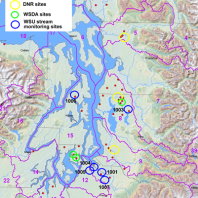
- Expand on the streams currently being sampled by the WA Dept. of Natural Resources as part of national P. ramorum survey and on nursery surveys by WSDA
- Continue molecular identification of Phytophthora species and their genetic lineages
Get Involved
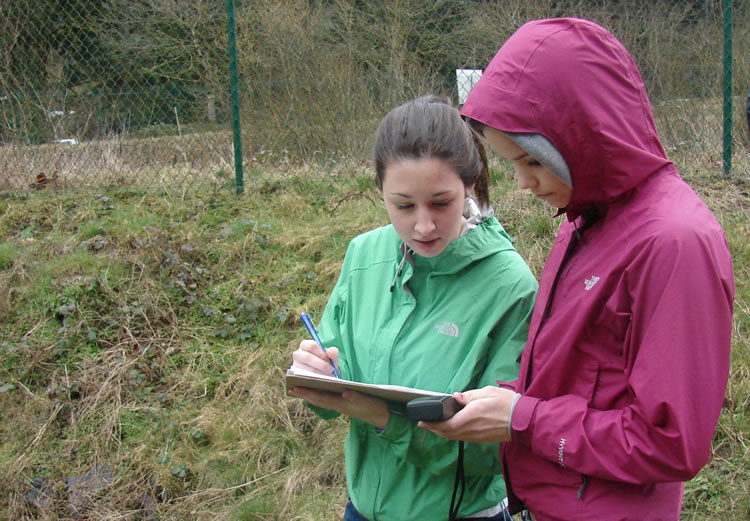
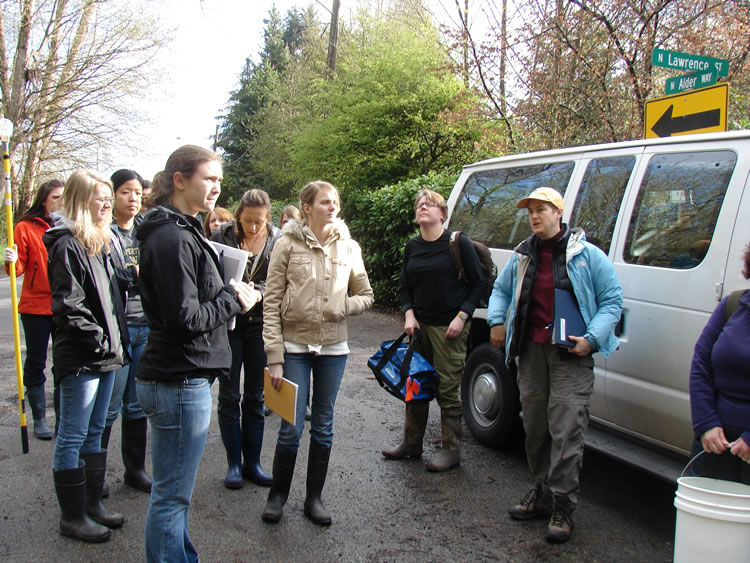
We are looking for volunteer groups, students, or other people who are interested in helping monitor streams in Western Washington.
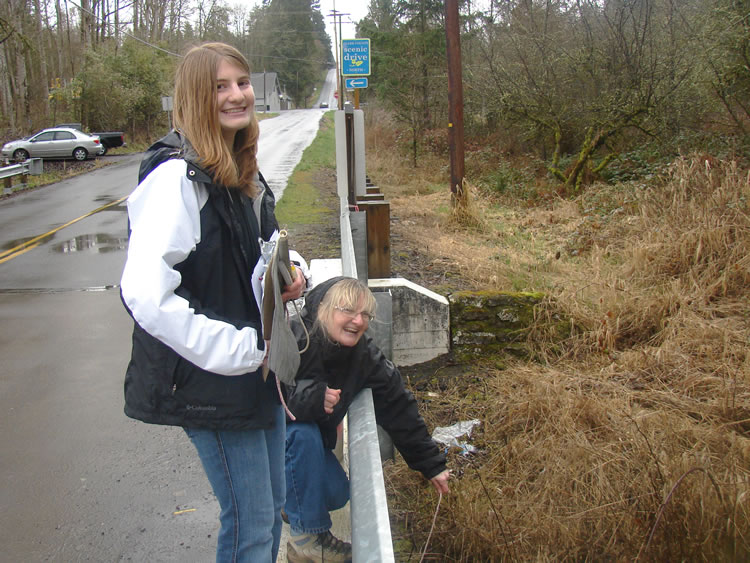
We need people who can access selected streams and place bait bags or collect water samples at regular intervals (about every two weeks) and can return these samples to the lab—we can provide mailing supplies.
If you are interested in participating, please let us know.
We also encourage students interested in conducting research to contact us to discuss project opportunities.

Current Project
2021 Stream Monitoring Project
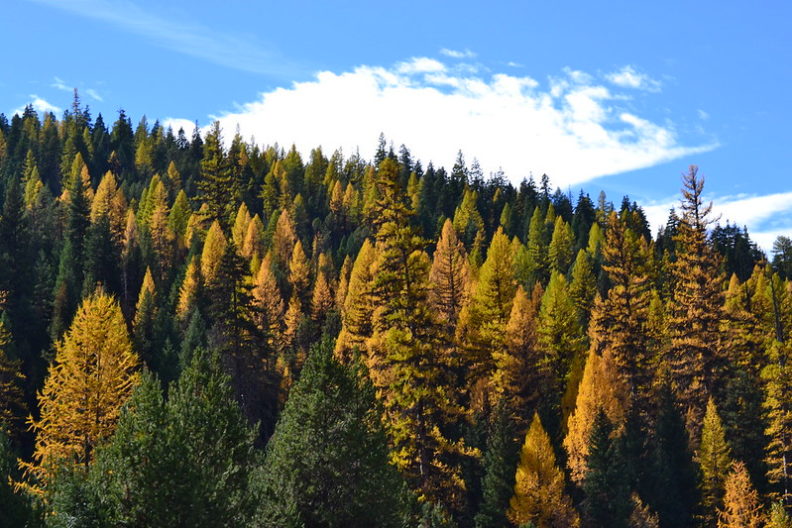
This year we are targeting streams near western larch populations on the east side of the Cascades.
Previous Stream Monitoring Projects
More Resources
Presentation (PDF)
Presentation (PDF)
Our Cooperators
USDA Forest Service

WA DNR

WSDA

WSU Puyallup Research & Extension Center
2606 West Pioneer, Puyallup, WA, 98371-4998 USA
Last updated 9/25/2025