Phytophthora (fy-toff-thor-uh)
Symptom Guide: Camellia species
Phytophthora are microscopic organisms that cause disease in many plant species, including Camellia species.
You can learn more about Phytophthora and Sudden Oak Death at the links below.
- Phytophthora (webpage)
- Phytophthora Symptom ID Guide (webpage)
- WSU Sudden Oak Death (webpage)
- Sudden Oak Death Education Program (webpage)
Camellia species
Prized Garden Plants
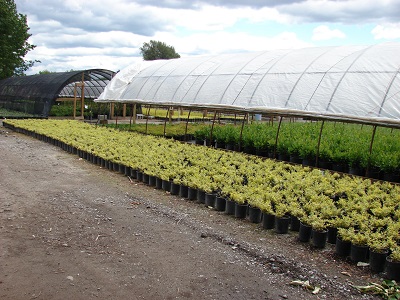
Camellia species are beautiful ornamental shrubs and flowering trees that can be found throughout neighborhoods and gardens in the Pacific Northwest.
Diversity
There are more than 250 species of Camellia and many more cultivars and hybrids.
Regulated Species
All species, hybrids, and cultivars are regulated as proven hosts for Phytophthora ramorum.
Phytophthora ramorum Symptoms
Leaf Lesions
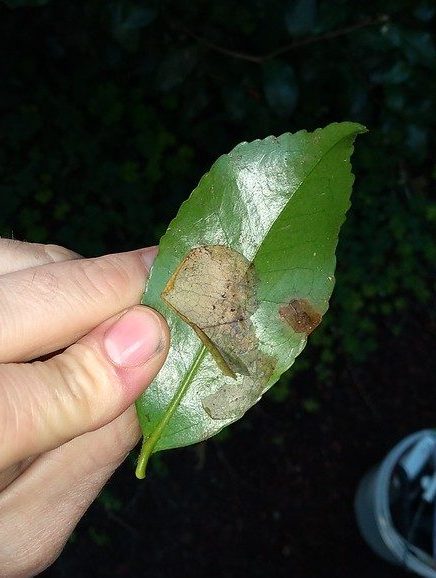
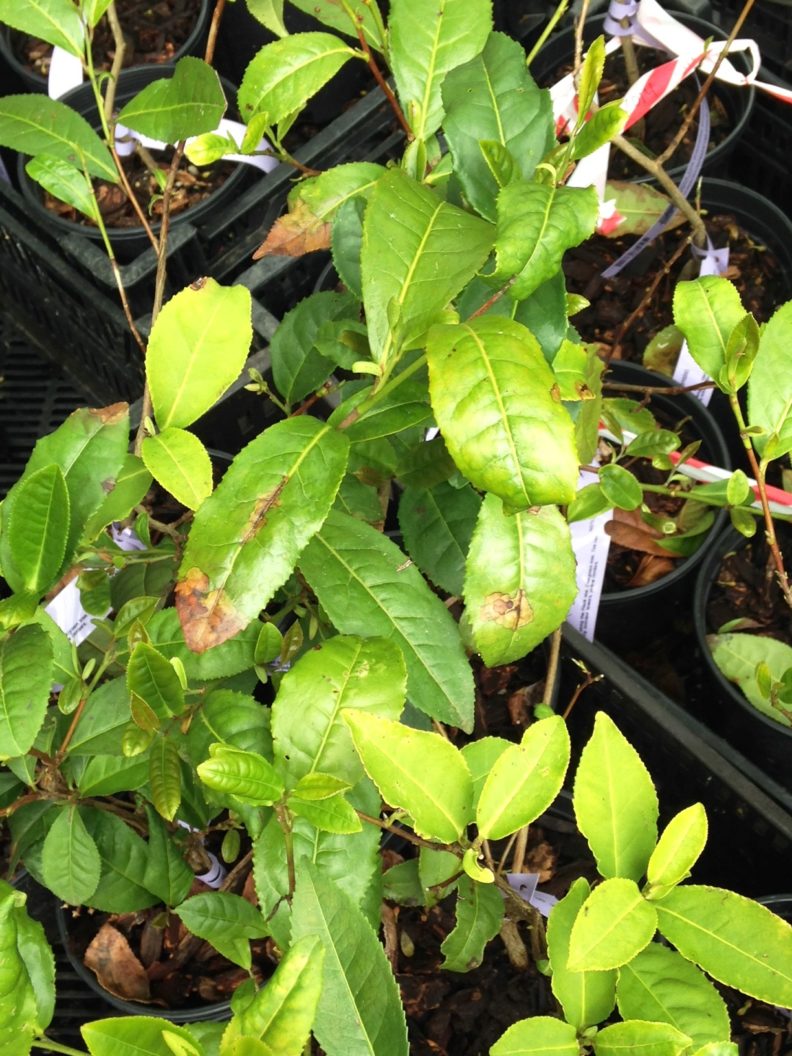
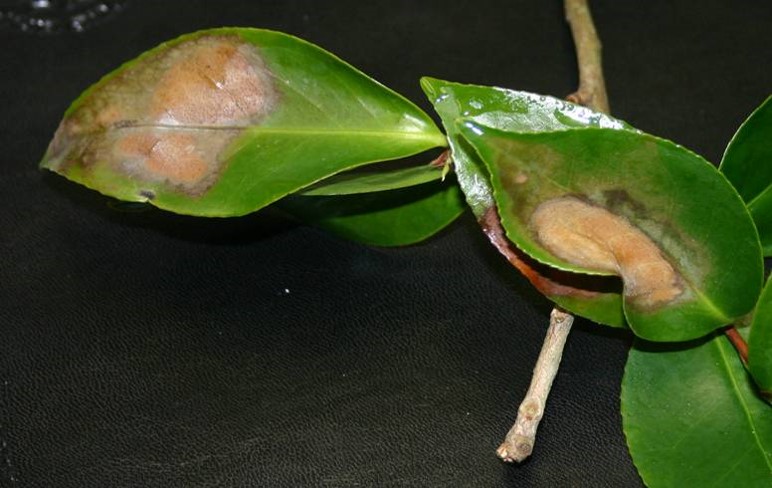
On Camellia, brown lesions tend to form at the leaf tip and are irregular in shape when the plant is infected with P. ramorum. As with Rhododendron, lesions generally appear along the midrib and petiole. Occasionally lesions form at the edge of the leaf.
The lesions appear diffuse and water-soaked. No fruiting bodies (structures resembling pin-heads or molds) are visible.

Defoliation
Defoliation often occurs on lower leaves of infected Camellia plants. No canker or dieback symptoms have been observed on Camellia.
Sunscald
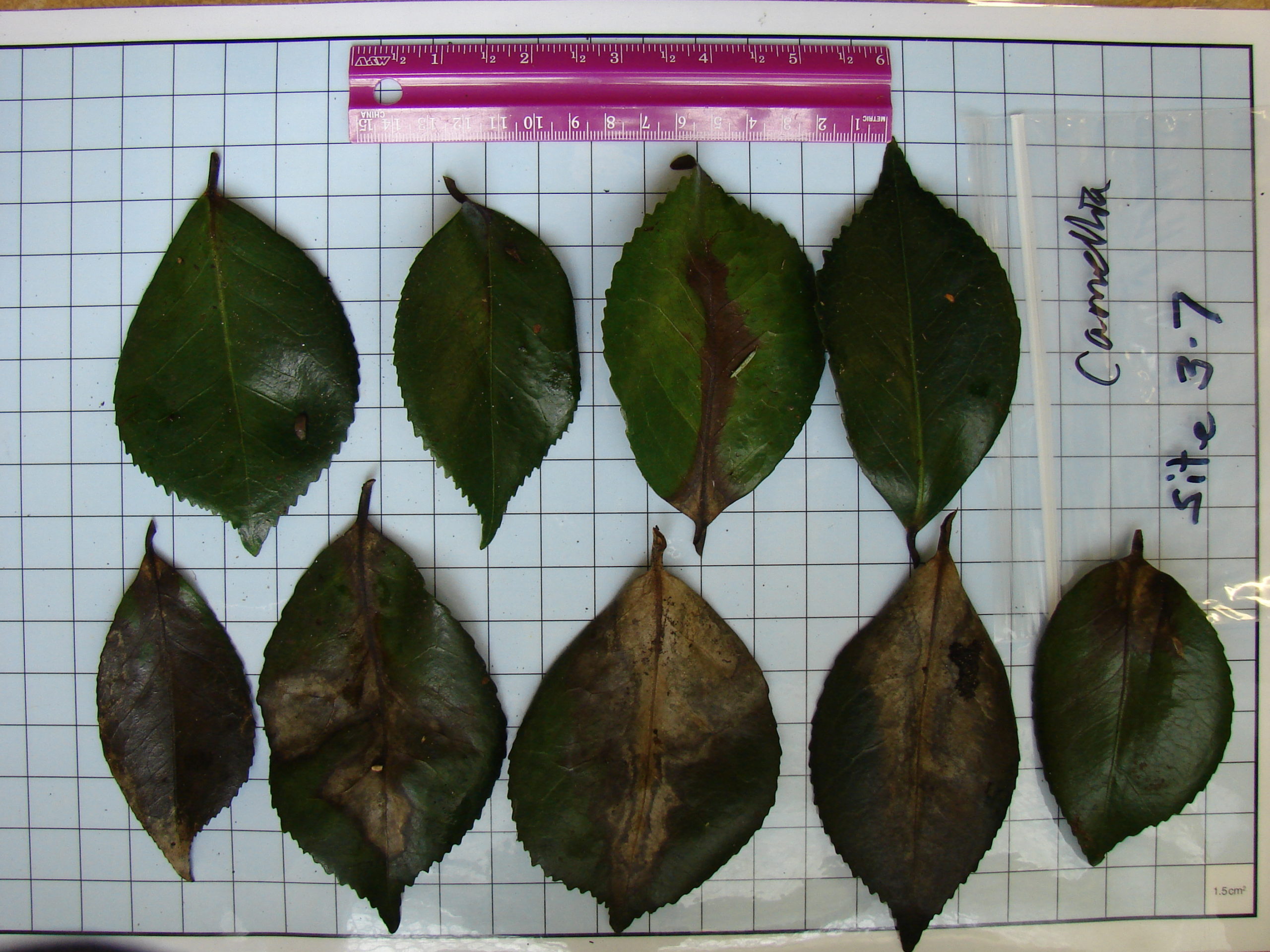
Camellia foliage can be affected by sunscald. Lesions from sunscald have defined margins, are not water-soaked, and are not associated with the midrib. These lesions can become infected with opportunistic fungi such as Pestalotia and Pestalotiaopsis.
More Resources
Learn more about Sudden Oak Death
More information, including links to youtube videos, about Sudden Oak Death . You can also find information for specific audiences (e.g. nursery professionals, garden managers, master gardeners, etc.) on our Sudden Oak Death Education Program webpage.
View more online symptom guides
There are many additional photos of symptoms on Camellia species in the other guides we have provided. Viewing multiple photos of symptoms on Camellia species may help you determine if Phytophthora ramorum is involved.
Management
Visit our webpage for Nursery Productions if you are looking for Best Management Practices for managing Phytophthora ramorum. These practices are also useful for managing other Phytophthora diseases, such as those that cause root disease, which can be more damaging on their hosts than P. ramorum.
Plant Disease Diagnostics
Guidelines for submitting a sample
Visit our Sample Submissions Guidelines webpage for information to help determine whether it will be helpful to submit a plant sample for professional diagnostics.
WSU Plant and Insect Diagnostic Laboratory
The WSU Plant Clinic can provide diagnostic services to identify the cause of symptoms on Rhododendrons and other plant species.

Learn more about the PPO Program
Our Research
Check out the breadth of research conducted by personnel in our program.
Our Community
Learn more about the personnel involved in the advancement of knowledge in our program.
Support Our Program
Read about the ways you can increase our capacity to serve and advance knowledge.


WSU Puyallup Research & Extension Center
2606 West Pioneer, Puyallup, WA, 98371-4998 USA
Last updated 9/24/2025