Welcome
Welcome to the WSU Pacific Madrone Research webpage!
The purpose of this webpage is to highlight the aim of our madrone research, describe our ongoing projects, and share important information for conserving the Pacific madrone.
We also invite you to participate in our research by joining the Arbutus ARME and subscribing to our newsletter. More information is available below, but feel free to contact us if you have any additional questions.
Pacific Madrone
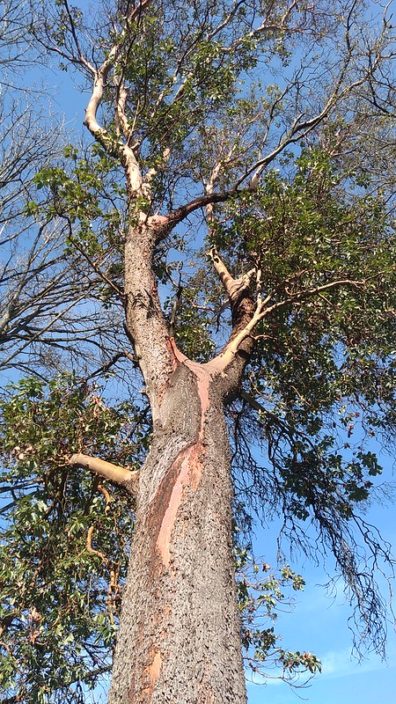
Madrone (also known as arbutus, madrona, or madroño) is an important tree in the Pacific Northwest because of its cultural and ecological value. For example, madrone is an important part of our cultural heritage because the berries were used widely as a food source and as bait for steelhead fishing. Ecologically, Pacific madrone is an important pioneer species. Its tolerance to salt water allows it to occupy many areas that would erode if not for its root systems.
Distribution
Madrone is a keystone species of the Pacific Northwest. Current populations range from the coast of central California into southern British Columbia. However, the distribution of Pacific madrone is expected to shift with changes in climate.
Research Aims
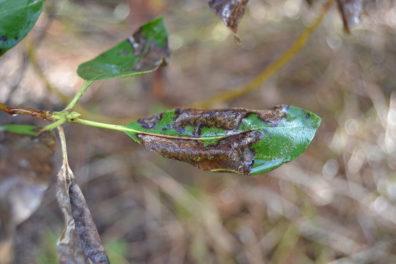
Research is critical to advance knowledge and conserve the madrone in the Pacific Northwest. Populations of this keystone species are already under threat from changes in the climate and pests and diseases. For example, madrone leaf blight is a major disease affecting madrone in western Washington and Oregon. In this regard, identifying populations that are most tolerant to leaf blight is a priority for our research program.
One of the primary aims of our program is to promote the health and sustainability of Pacific madrone. There are two ongoing studies designed to help accomplish this aim:
Common Garden Study
Madrone trees from various seed sources, collected throughout its range, were planted at sites ranging from California to British Columbia. These ‘Common Gardens’ are monitored annually to identify the genotypes best suited for each region.
Pacific Madrone Survey
We need your help!
You’re invited to join the Arbutus ARME and contribute to research about the range and health conditions of Pacific madrone! These data will be valuable for identifying vigorous trees with resistance to leaf blight in wild populations and monitoring for the emergence of novel threats, such as new pests and diseases. Anyone is welcome to participate.
Arbutus ARME
Background
The Arbutus ARME is a ‘citizen science‘ program that was established through a partnership between WSU and Seattle Parks and Recreation in 2019.
Contribute to Research!
You can contribute to research to advance knowledge and help conserve the Pacific madrone.
Join the Arbutus ARME!
Visit our Arbutus ARME webpage to join the Arbutus ARME and subscribe to the newsletter.
More Information
Contact us for more information, research updates, or ways to contribute.
Events
Previous Events
“The Future of Pacific Madrone” Mini-conference was held April 19-20 2016 at WSU Puyallup.
Upcoming Events
Check back soon or contact us about upcoming events to learn more about our Pacific madrone research or the opportunities to meet others in the Arbutus ARME.
Social Media
WSU Puyallup Research & Extension Center
2606 West Pioneer, Puyallup, WA, 98371-4998 USA
Last updated 9/24/2025