2011-1102 Clarks Creek downstream
Clarks Creek downstream
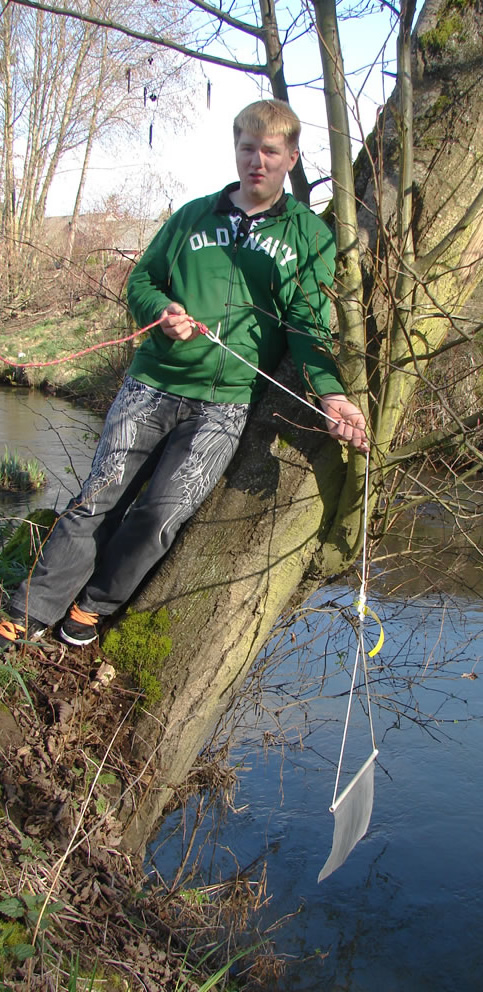
a teenaged boy in a green sweatshirt and black jeans with a decoration of wings down the front to his knees is leaning against a tree that leans out at an angle from the bank of a stream, holding the string of a flat mesh bait bag that is being held over the water.
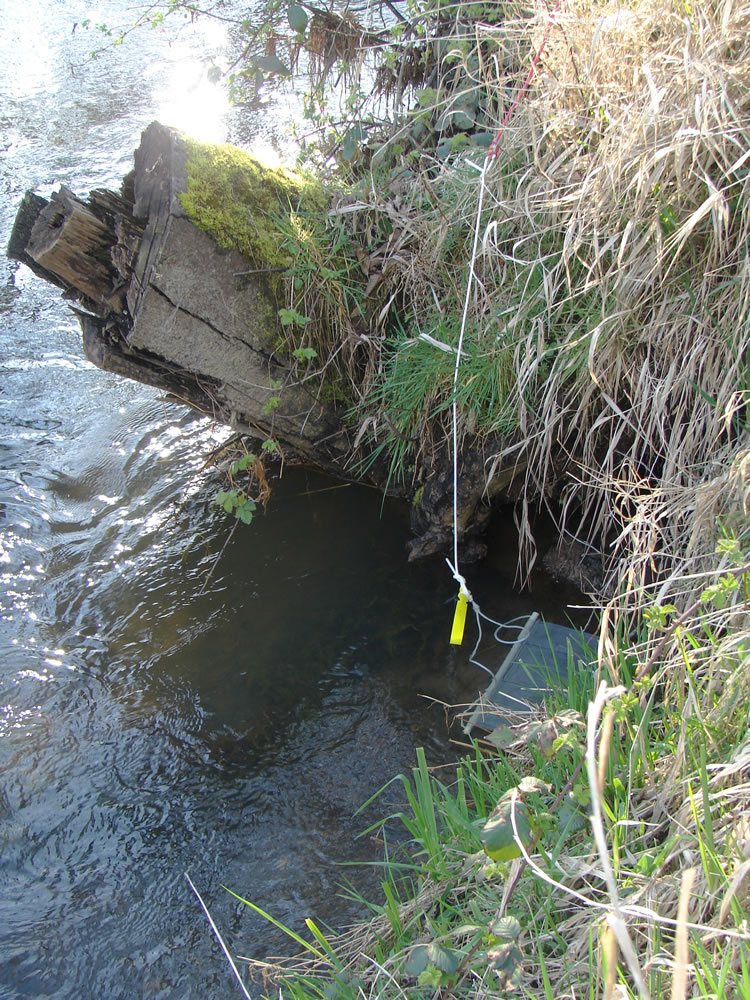
the bank of a creek with a dead stump at a steep angle over the water near the top left of the frame. There is some live green grass close to the water and a lot of dead brown grass above it. A red string tied to a white string comes down from the upper right of the frame with a piece of yellow tagging attached, hanging down to a flat mesh bait bag floating in the water.
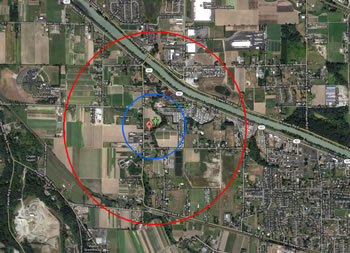
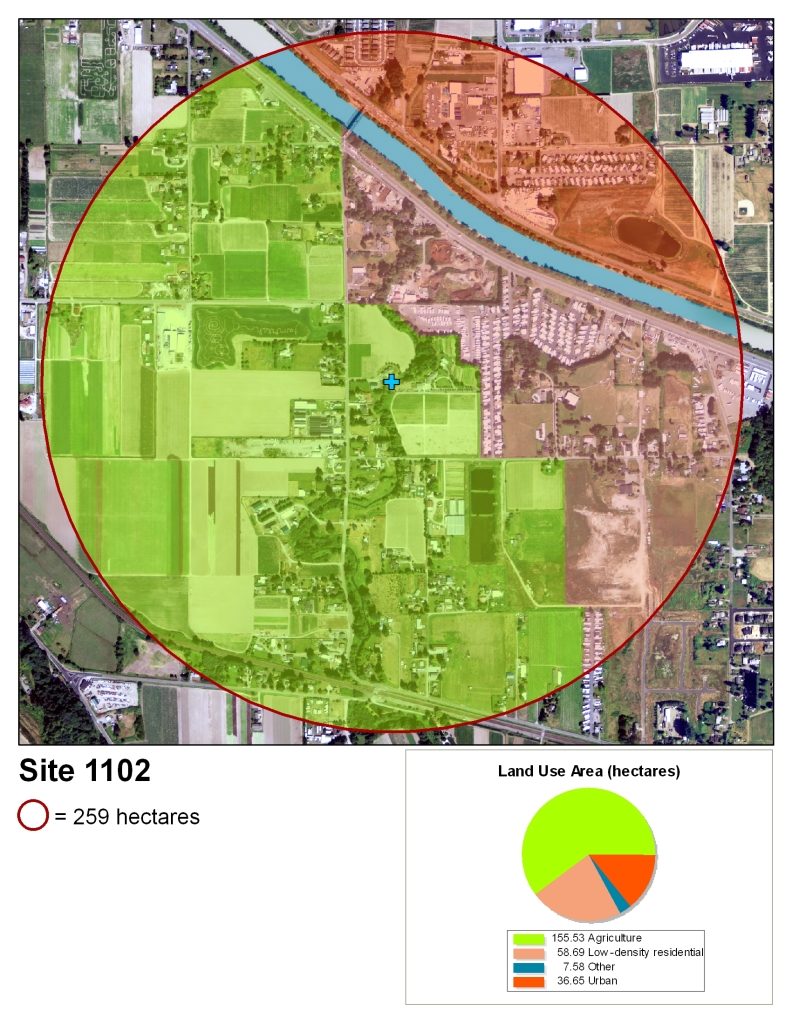
land use map for site 1102. A large red circle on the map 259 hectares of land. Within the circle, each land use type is indicated in a different color, and at the bottom of the page is a circle graph showing the amounts of each. Of the 259 hectares, 155.53 is agriculture, 58.69 is low-density residential, 7.58 "other" (it is a river) and 36.65 urban.
the same land area as is indicated in the map above. the red circle on the outside shows the extent with a smaller blue circle inside it, around a red location marker at the center.

Site #1102 Clarks Creek, Puyallup, WA


Elevation 24 ft
Stream order 2 (pdf)


Clear/Clarks Creek Basin Plan (pdf) 2006, Pierce County Public Works & Utilities

USGS data for Clark’s Creek

Results from 2011 monitoring

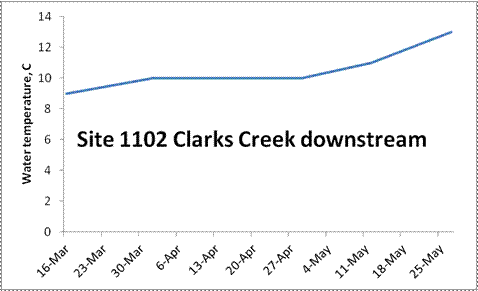
A line graph indicating the water temperature results from Site 1102 Clarks Creek downstream. It was 9C on 16 March, up to 10C from 6 April until 4 May. It rose to 11C by 18 May, and up to 13C by 25 Mya.
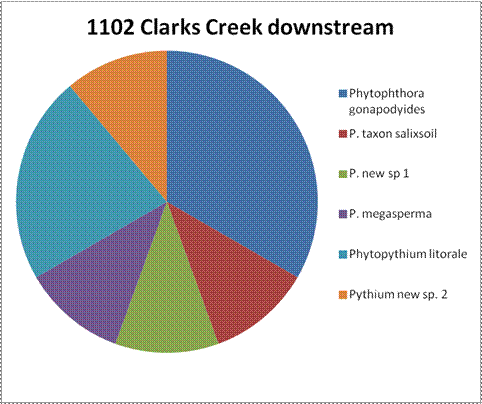
A circle graph without numbers for the percentages indicating the species test results from site 1102 Clarks Creek downstream. The most samples were identified as Phytophthora gonapodyides, followed by Phytopythium litorale. The other four had approximately the same amount of results: Phytophthora taxon salixsoil, Phytophthora new sp 1, Phytophthora megasperma, and Pythium new sp 2.

Results from 2010 monitoring

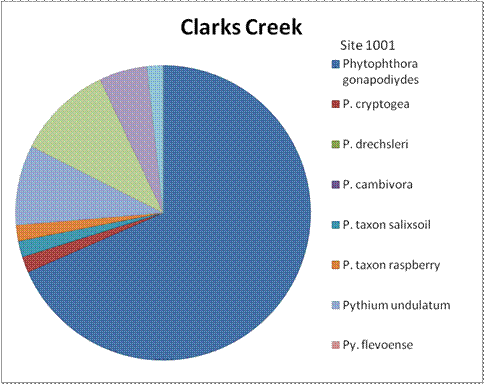
A circle graph without percentages for the numbers that indicates the previous year species results for the same site. Around 2/3 of the results were Phytophthora gonapodiydes. Phytophthora drechsleri was next, followed by Pythium undulatum, then Pythium flevoense. With a small amount of results for each species: Phytophthora cryptogea, Phytophthora taxon salixsoil, Phytophthora taxon raspberry, and Phytophthora cambivora.

WSU Puyallup Research & Extension Center
2606 West Pioneer, Puyallup, WA, 98371-4998 USA
Last updated 9/24/2025